Safety & Health
Governance
Organizational Structure
Dedicated Safety Organization
POSCO's Safety Planning Office, under the Safety, Health & Environment Division, serves as the control tower for company-wide safety management. Pohang Works and Gwangyang Works also operate dedicated Safety and Disaster Prevention Groups that specialize in on-site safety. In 2026, POSCO established the Serious Accident Prevention TF within the Safety Planning Office to strengthen its focus on preventing serious accidents and to monitor prevention activities at business sites. At each site, beyond on-site supervisors and safety and health team leaders, dedicated safety management support personnel are assigned to every plant, while Life Keepers1) are separately deployed for high risk operations.
1)Life Keeper: deployed to six high-risk types of work, such as entrapment and falls, to observe and guide work-safety measures and workers' unsafe behaviors.

Safety Advisory Committee
Since May 2022, POSCO has operated a Safety Advisory Committee, comprising the Chief Safety Officer(CSO) and 14 internal and external safety experts. In 2025, we held the committee three times to discuss company-wide safety strategy, activating workers' three rights, and proactive responses to the new government's safety and health policies. The Committee also placed particular focus on raising safety accountability among the management of POSCO and its contractors, and on enhancing the operational framework to ensure that frontline workers' right to refuse unsafe work is exercised effectively.
Safety Councils
POSCO operates a Steel Division Sustainability Council to share ESG-related issues in the steel sector and discusses response measures, and the POSCO Health & Safety Management Committee to share POSCO's safety and health performance and review its management system. Additionally, since April 2022, POSCO has operated the Steel Division Safety Council on a semi-annual basis―with the participation of major domestic and overseas operating companies and overseas subsidiaries―to monitor the safety and health conditions of key global business sites. Through this consultative body, POSCO shares safety strategies and risk management frameworks with the goal of elevating and standardizing safety levels across the steel sector.
Safety Council Operating System
| Category | Participants | Purpose |
|---|---|---|
Steel Division Sustainability Council |
CEO, Representative Directors of domestic and overseas steel-division operating companies(heads of overseas subsidiaries) | Share domestic and overseas steel-division ESG issues and responses |
Steel Division Safety Council (under the Group Safety Innovation TF) |
Safety executives of domestic and overseas steel-division operating companies | Share domestic and overseas steel-division safety and health performance and review the management system |
Health & Safety Management Committee |
POSCO safety executives and contractor CEOs | Share POSCO safety and health performance and review the management system |
Dedicated Health Organization
The Health Planning Office under POSCO's Safety, Health & Environment Division serves as the control tower overseeing the company's overall health management. We operate region-specific dedicated organizations, including the Occupational Health Centers at both Pohang and Gwangyang Works and the Health Promotion Center in Seoul, each specializing in workplace health management. Health-related plans, performance, and key issues are reported to the ESG Committee.

1)The Occupational Health Center operates an occupational-health section and a health-support section
Future Health Committee
Since July 2021, POSCO has operated the Health Advisory Committee, which provides consultation and identifies areas for improvement in the company's occupational health management system. In August 2024, the committee body was expanded and reorganized into the Future Health Committee to develop and implement preventive employee health promotion strategies.
The Future Health Committee consists of the senior vice-chair of the POSCO Labor Union, the Worker representative of the POSCO Labor-Management Council, the Chief Safety Officer(CSO), the Head of Labor and Cooperation Office and the Head of Health Planning Office, who serves as Secretary. In 2025, the Committee established and reviewed employee health promotion policies and assessed the progress of their implementation. The committee plays a key role in ensuring that the opinions of external experts, the POSCO Labor Union, and the POSCO Labor-Management Council are reflected in management's occupational-health decisions, supporting improvements to the working environment and the advancement of health-promotion systems and programs.

Health & Safety Policy
Health & Safety Management Policy
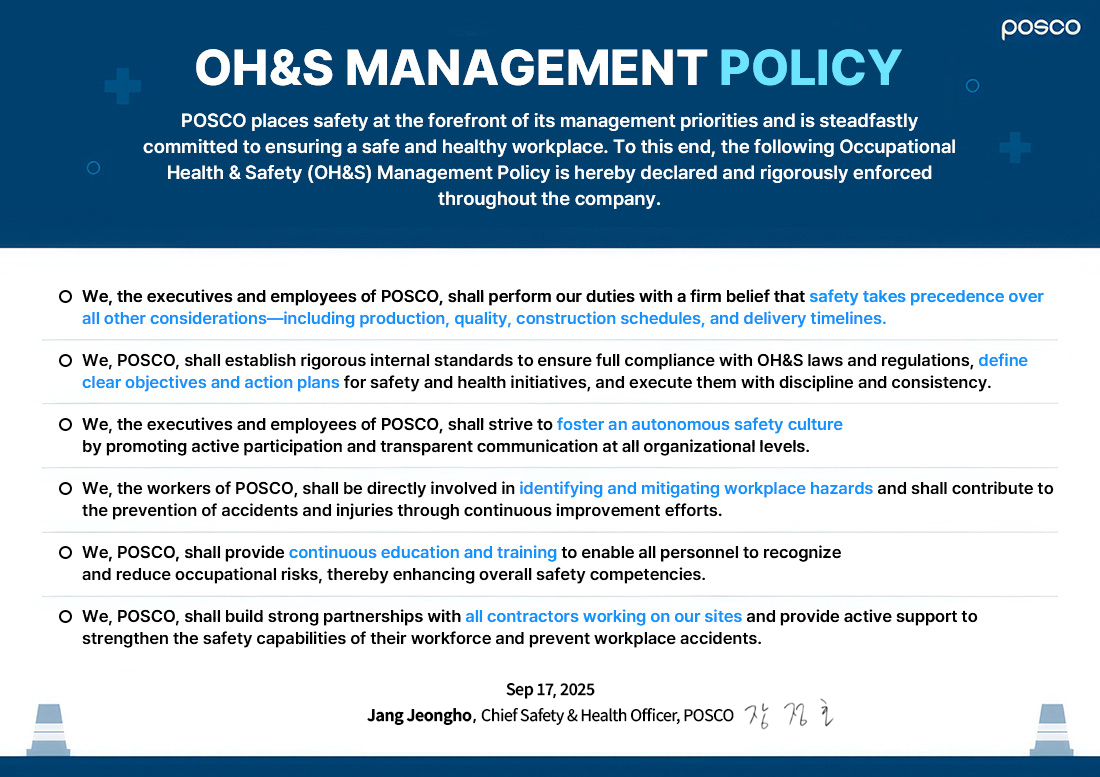
Through its Safety and Health Management Policy, POSCO stipulates that safety takes precedence over all other values, including production, quality, construction schedule, and delivery. The Policy clearly defines the company's safety and health management philosophy and decision-making approach, including compliance with domestic and overseas occupational safety and health regulations, elimination of hazards, achievement of zero-accident targets, and establishment of a safety and health management system. The Policy applies to all worksites and overseas subsidiaries, also encourages its contractors and suppliers to adhere to this Policy or equivalent standards, thereby raising safety and health standards across the entire supply chain. Since its enactment, the Policy has been continuously revised with the approval of the Chief Safety Officer(CSO).
To systematically meet the requirements of the Serious Accidents Punishment Act and establish an advanced global safety system, POSCO has defined and implemented nine elements of its safety and health management system since 2022.
Nine Elements of the Health & Safety Management System

Health & Safety Management Principles
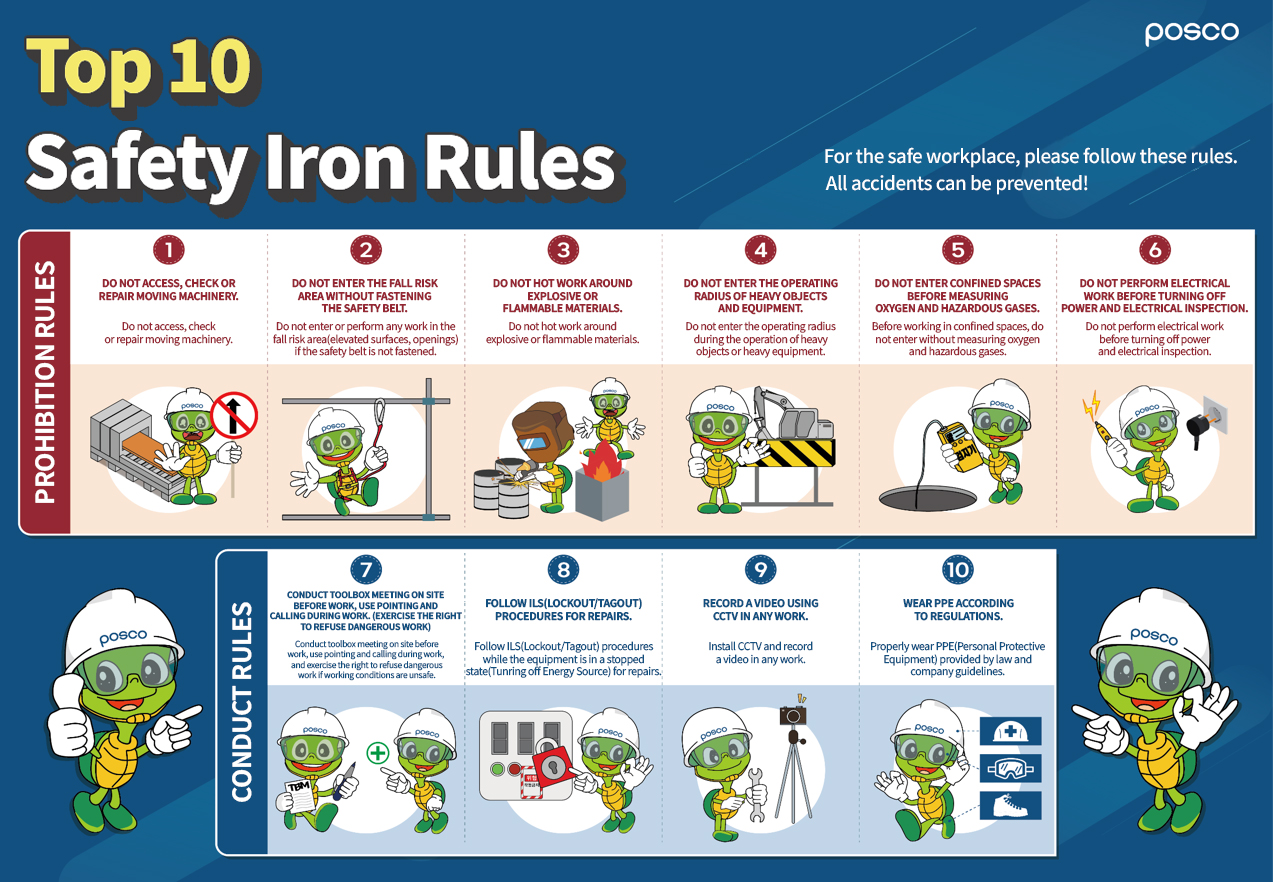
Top 10 Safety Iron Rules
POSCO has operated the 'Top 10 Safety Iron Rules' since 2004 and announced a revision in July 2023, reflecting the changing work environment and the opinions of stakeholders including employees. The revised 10 Major Safety Rules' apply to domestic and overseas worksites and are shared with group companies as a reference for establishing safety principles suited to each company.
Strategy
Risks and Opportunities
Safety-and-Health-Related Risks and Opportunities
POSCO has identified safety and health as a material topic and manages it accordingly. We identify potential safety and health risks and opportunities and implement detailed response measures to address them.
| Type | Value Chain | Risk Factor | Description(incl. financial impact) | Detailed Response |
|---|---|---|---|---|
Risk |
Own Operations |
- Hazards arising from production-line operation and maintenance during business operations including steel manufacturing - Operational disruptions resulting from stricter worksites safety and health regulations(including the Occupational Safety and Health Act and the Serious Accidents Punishment Act) and potential penalties for non-compliance |
- Loss of operating rate and reduced revenue from operational stoppages due to worksite accidents - Fines and penalties(non-operating expenses) for violations of safety-related laws | · Optimize the field through VOE-based safety-system improvements at each work stage |
Strategies and Reponses
Hazard Management
Risk-Assessment Improvement Case
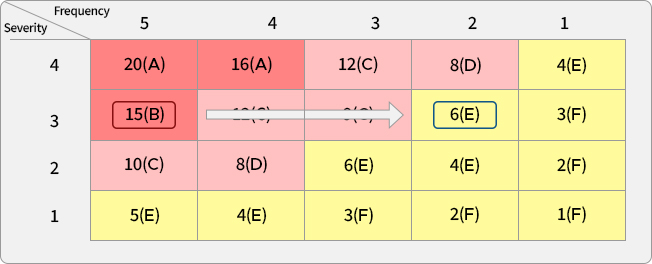
At the Electrical Steel Plant of Pohang Works, a risk assessment identified a fall hazard caused by narrow footholds during tension reel inspection and feeding operations. To ensure worker safety, POSCO installed a wider work platform and stairs providing access to the lower area, improving the risk rating from B to E.
| Category | Description | Risk Grade (Severity x Frequency) |
|---|---|---|
| Before | Fall risk from a narrow inspection platform | Grade B(15) |
| After | Installed stairs to reach the lower level and improved safety platforms around the facility | Grade E(6) |
Reduction of risk ratings through risk assessment
Accident Investigation and Management
When an accident occurs at a worksite, POSCO notifies all employees of the relevant facts, investigates the accident, and establishes and implements measures to prevent recurrence. In an emergency, we respond under the Rapid Response Guidelines for Serious Accidents, carrying out swift reporting and action led by a dedicated response team, and we maintain a dedicated helicopter and a system linked to medical institutions for transporting and treating emergency patients.
Compliance with Laws and Standard Procedures
POSCO carries out semi-annual reviews to ensure compliance with the Serious Accidents Punishment Act at its business sites, continuously identifying and addressing any shortcomings. Led by the steelworks' safety departments, we also foster a safety culture in which fundamental safety rules and standards strictly observed through ongoing diagnostics and safety inspections. In 2025, supervisors' ongoing safety patrols at the steelworks identified about 42,000 proactive improvement items, with corresponding preventive measures implemented.
Special inspections are conducted on by-product gas handling facilities and pipelines, areas with a high risk of serious accidents, to prevent potential hazards such as gas leaks in advance. We also review the implementation of recurrence prevention measures for past serious accidents and shares verified best practices across the Company, strengthening systems to prevent similar incidents. In addition, we have completed comprehensive inspections and reinforcement of corrosion-prone areas in the Iron and Steelmaking Area to systematically reduce the risk of serious accidents arising from aging facilities.
Operating and Managing Two-Way Communication Channels
POSCO operates various safety communication channels for the company and its employees, as well as for direct operations and contractors. Company representatives such as the Chief Safety Officer,the head of Works, and plant managers actively listen to the opinions of POSCO's workers and its contractors to establish and carry out safety and health goals and policies.
| Category | Participants |
Frequency | Key Topics |
|---|---|---|---|
| Health & Safety Management Committee |
· Chief Safety Officer |
Semi- annual |
Share POSCO safety and health performance and review the management system |
| Steel Division Safety Council (under the Group Safety Innovation TF) |
· Chief Safety Officer |
Semi- annual |
Share POSCO Group steel-division safety and health performance and review the management system |
Occupational Health and Safety Committee | · Chair(steelworks head) · Worker-side members(incl. representative-body heads)· Company-side members | Quarterly |
Deliberate and resolve major safety and health issues at the steelworks(e.g., accident-prevention plans and worker safety & health training)
|
Business Site Council | · Led by deputy heads and general managers(Department level) · Contract Representative Directors | Monthly |
Share improvement activities such as safety and health issues and potential hazards |
Labor-Management Joint Committee | · Led by plant leader(plant level) · Contract staff and their representative-body employees | Monthly | Share plant-level safety and health issues and hear VOE(Voice Of Employees) |
Emergency Response Plan
POSCO has established and maintains an Emergency Response Plan to minimize damage to people and property in the event of serious industrial accidents, disasters, and other emergencies. To verify the effectiveness of the emergency response framework, we conduct plant- and section-level drills for four major emergency types, including fire, Process Safety Management(PSM), confined space incidents, and chemical accidents. Each scenario is supported by established procedures for issuing emergency alerts, halting operations, and evacuating personnel, with regular drills carried out accordingly. Where nearby communities may be affected, we have also developed dedicated plans and principles for resident-related response.
We operate a Rapid Response Guidelines for Serious Accidents to respond swiftly and systematically in emergencies. The guideline covers emergency response procedures and the composition and operation of a rapid-response TF,. The rapid-response team leader is designated as the Chief Safety Officer(CSO), we reports directly to the CEO when an emergency arises. We also use a business helicopter for emergency-patient transport to establish a rapid transport system, and we cooperate with medical institutions to provide optimal treatment.
Drill Record for the Four Emergency Types
| Category (by law) |
Led by Safety & Disaster Prevention Group | Led by Environmental Resources Group |
||||||||||
|---|---|---|---|---|---|---|---|---|---|---|---|---|
| Firefighting(1/yr) | PSM(semiannual) | Confined space(semiannual) |
Chemical accident(1/yr) |
|||||||||
| Target | Record | Completion rate | Target | Record | Completion rate | Target | Record | Completion rate | Target | Record | Completion rate | |
| Pohang Works | 66 | 66 | 100% |
38 |
38 |
100% |
61 |
61 |
100% |
32 |
32 |
100% |
|
Gwangyang Works |
71 |
71 |
100% |
35 |
35 |
100% |
61 |
61 |
100% |
47 |
47 |
100% |
|
Technical Research Laboratories |
12 |
12 |
100% |
N/A |
4 |
4 |
100% |
2 |
2 |
100% |
||
|
Seoul Office |
3 |
3 |
100% |
N/A |
2 |
2 |
100% |
N/A |
||||
Operating Worker Health and Wellness Support Programs
Worker health check-up program
POSCO covers health checkup expenses for all employees, including contract employees with at least a year of service, and since 2022, we have offered one of the most advanced comprehensive checkup services in Korea through agreements with Tertiary hospitals. Since 2013, this benefit has also been extended to employees’ spouses, with a cumulative total of 40,277 beneficiaries as of 2025. In addition, POSCO offers discounted health checkup fees for employees' parents and children through partnerships with medical institutions.
Mental health and psychological counseling programs
In 2025, the center conducted a total of 4,500 one-on-one face-to-face counseling sessions, comprising 3,736 sessions for POSCO employees, 369 for their families, and 395 for contractors' employees. Additionally, since 2024, POSCO has been raising awareness of mental health crises by providing life-respect training to all employees, alongside gatekeeper training for supervisors.
Employee health-promotion activities
To prevent diabetes, hypertension, and hyperlipidemia, POSCO launched a one-on-one personalized blood-sugar management program. This 12-week program targets employees diagnosed with diabetes or identified as high-risk through routine health checkups. Participants wear a 24-hour continuous glucose monitor(CGM) to track their blood glucose levels in real time, which automatically syncs the data to a dedicated app. Participants also record lifestyle habits such as exercise and diet in the app, while medical specialists and clinical nutritionists comprehensively analyze the data to provide customized blood glucose management. In 2025 program, 550 out of 556 participants completed the program, achieving an 83.2% improvement in chronic conditions(diabetes 68.9%, hyperlipidemia 77.6%, obesity 66.9%).
Key Employee Health-Promotion Results(2025)
| Program | Target | Descreiption | Performance |
|---|---|---|---|
| 12-Week Blood-Sugar Improvement Program |
Employees | Provide one-on-one personalized solutions by analyzing individual blood-sugar profiles | 550 participants |
| 8-Week Exercise Program | Employees | Promote exercise habits and improve basic fitness through exercise prescriptions and group coaching for employees needing chronic-disease management | 210 participants |
| On-Site Health Plus | Employees | Nurses and physical therapists conduct on-site visits to provide health management training | 873 participants |
On-Site Fitness 'Gosim-Tapa' | Employees | Exercise specialists visit worksites to provide hands-on training on cardiovascular-disease prevention exercises | 178 participants |
On/offline Health Lectures | Employees and contractors | Invite external experts to give lectures on various health topics | 16 sessions held |
Health Challenge | Employees | Reward top performers in three activities: muscle mass gain, body-fat reduction, and walking | 3,005 participants |
In-person counseling performance at the Mindfulness Center
| Category | 2023 | 2024 | 2025 | Cumulative |
|---|---|---|---|---|
| Employees |
2,528 | 2,521 | 3,736 | 8,785 |
| Employees family | 636 | 773 | 369 | 1,778 |
| Contractors | 149 | 347 | 395 | 891 |
Total | 3,313 | 3,641 | 4,500 | 11,454 |
Health & Safety Training
POSCO's safety training is centered practical exercises, discussions, and hands-on practice, and also contributes to enhancing the safety training systems of its contractors. In particular, in collaboration with the POSCO Group Safety Academy, established to systematically run safety training within the group, we run safety-capability courses that consider all levels at POSCO and its contracts. To strengthen employees' professional safety capabilities, we also run courses such as external P&ID training for process-safety managers and an accident-investigation expert course for managers and safety-department staff, promoting accident prevention and self-directed safety management.
Safety training for site entrants
POSCO operates a Site Entrant Safety Training Policy under which only personnel who have completed safety training are permitted to enter its business sites. This program enhances participants' understanding of essential safety requirements and work-related hazards. By properly following on-site safety procedures―such as the Isolation Locking System(ILS), Safe Work Permits, and Tool Box Meetings(TBM)―personnel can identify potential hazards in advance and establish corrective measures before starting work, thereby preventing accidents.
Key 2025 Training Record
| Course | Participants | Target | ||||
|---|---|---|---|---|---|---|
POSCO | Group Affiliates | Contractors | ||||
| Safety leadership training for manager candidates | 75 | ● | ||||
| High-risk work safety-management training | 268 | ● | ||||
| PSM capability training | 1,024 | ● | ● | ● | ||
Chemical hazard and risk assessment practical training | 141 | ● | ||||
Personal protective equipment fit-test practical training | 72 | ● | ||||
Contractors level-specific safety-capability training | 12,212 |
| ● | ● | ||
Contractors supervisor safety-leadership and work-observation training | 566 |
| ● | ● | ||
Site entrant safety training | 56,080 |
|
| ● | ||
Working-environment management practical training | 120 | ● |
|
| ||
Operating the Safety Report Center
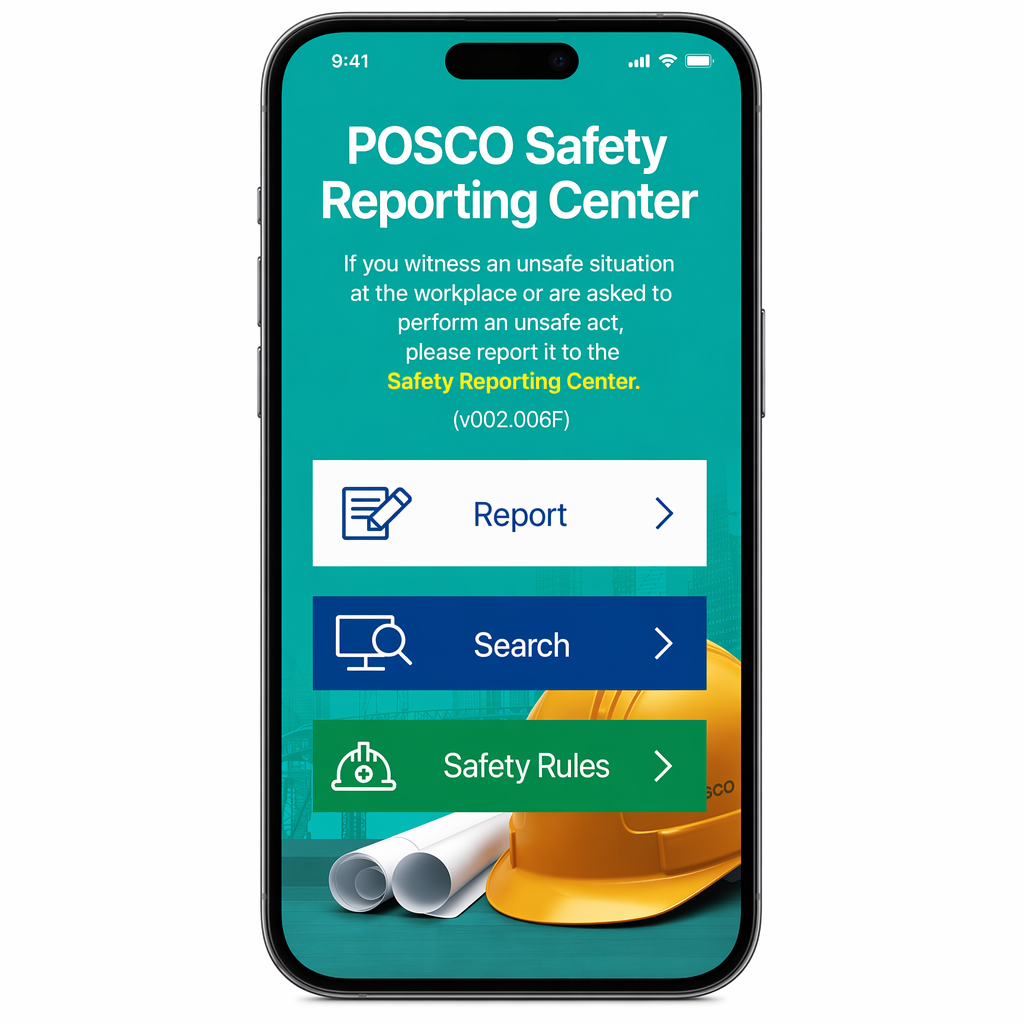
App screen
POSCO operates a Safety Report Center, which allows anyone entering POSCO can report unsafe site conditions or work-related matters. Reports can be made via a provided QR code, and responsible personnel promptly checks reported hazards and takes improvement measures.
We have also developed and operate a mobile app so that workers can easily exercise their right to stop work on site. Through this, we identify repeatedly exposed hazards and analyze and eliminate root causes, establishing a worker-led safety culture.
Safety Report Center Status
| Category | Users | Reports received | |
|---|---|---|---|
| 2024 | 2025 | ||
| Safety Report Center | All steelworks entrants | 1,125 | 909 |
Working-Environment Management
POSCO is committed to creating a safe and comfortable working environment by investing in occupational health initiatives. We thoroughly monitor confined spaces, personal protective equipment (PPE), and chemical management in workplaces. We strictly comply with government standards, such as the Occupational Safety and Health Act and notices from the Ministry of Employment and Labor. To prevent heat-related illnesses during heatwaves, we implement temperature-specific work protocols, which include adjusting work and rest hours based on temperature levels and providing tailored guidance for vulnerable workers. We also issue heatwave alerts, conduct on-site patrols, and actively provide heat-relief supplies such as cooling fans, shade canopies, and bottled water. In addition, we promote awareness of heat-related illnesses through on-site medical support and informational materials, banners, and posters across our worksites.
Smart Health & Safety Technology
POSCO uses smart technologies such as AI and IoT to reduce blind spots in workplace safety and protect workers. By introducing smart safety-inspection and monitoring technologies, we diagnose and inspect hazards that can arise at worksites in advance, and we deploy robots for high-risk work that would otherwise involve people, working to fundamentally block the risk of safety incidents at our worksites. We also secure the safety of hazardous facilities through a self-directed safety-inspection program for hazardous machinery and equipment. We completed 35,266 inspections of a total of 19,413 hazardous machines and pieces of equipment, diagnosing and improving equipment defects and potential hazards in advance through a thorough self-inspection system.
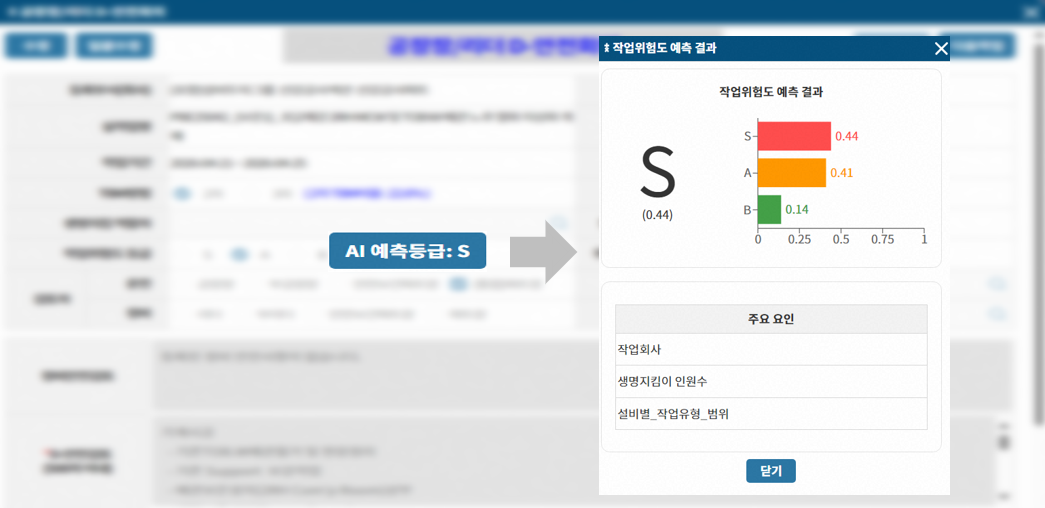
To prevent serious accidents, POSCO operates a D-Safety Meeting that reviews the risk factors of the next day's work in advance every day. To make this meeting more effective and build a data-based safety system, in February 2026 we developed and now operate an AI-based work-risk prediction model that learns work types, work content, and past risk assessments to provide work-risk(S/A/B grade) guidance. By operating the model, we level up the consistency of field work-risk judgments and use safety-management resources effectively.
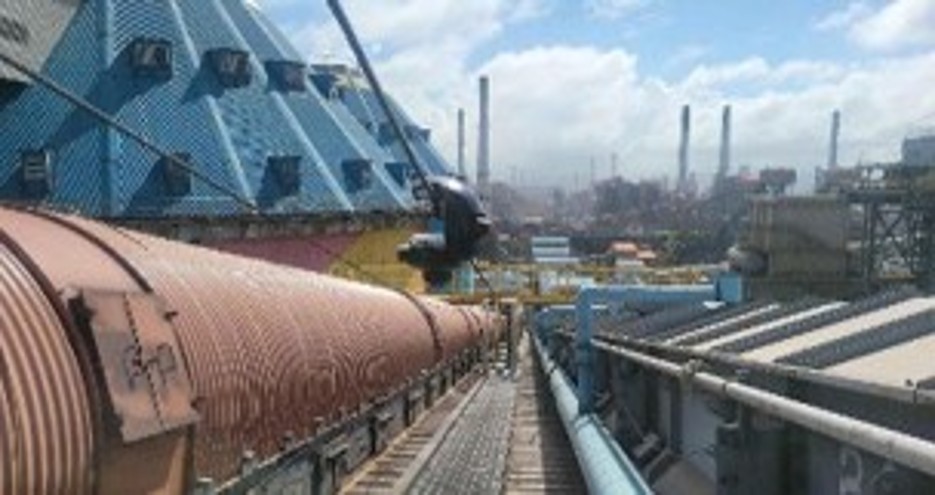
The steelworks is converting inspection of its nearly 700 km of raw-material conveyors from a manual method to a smart method using the Smart Wire Ball. The Smart Wire Ball moves along a wire fixed above the belt conveyor and uses AI to analyze sound, thermal imaging, and video, showing any abnormalities in real time. It is being piloted at nine sites across Pohang Works and Gwangyang Works and will be expanded further.
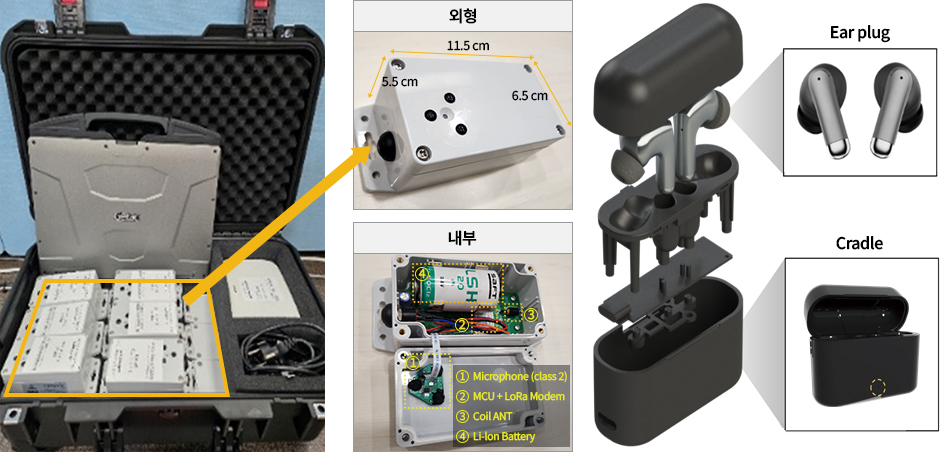
In December 2025, we developed smart earplugs utilizing IoT noise-measurement technology that measures sound pressure and frequency, and we plan to introduce them in phases, including demonstration tests at the Pohang Works and Gwangyang Works workplaces. While wearing the hearing-protection earplugs, workers benefit from situation-specific noise attenuation and short- and long-range communication between workers, minimizing noise exposure in noisy workplaces while still allowing workers to talk.
POSCO continually develops and applies various safety solutions incorporating smart technology in the field. POSCO took the lead in developing and introducing a forklift safety braking system to fundamentally prevent forklift collisions, a high-risk factor at industrial sites. This smart safety solution analyzes the distance to pedestrians in real time using an AI sensor camera when a forklift reverses, automatically decelerating and braking in stages when a collision risk arises. We prioritized application in high-risk work zones within the steelworks and have so far completed installation on a total of 126 forklifts.
POSCO also developed and operates a wheeled robot for unmanned facility inspection, applying it at the underground electrical room of the No.4 hot-rolling mill at Gwangyang Works. The electrical room is a high-risk work zone with constant risk of electric shock and explosion from high-voltage current. The robot is designed to autonomously drive and patrol the underground electrical room, an area larger than two soccer fields, avoiding obstacles such as drainage channels, and to check the operating status of various facilities without deploying workers. By installing a charging station on site for continuous robot operation, we reduce workers' burden of on-site inspection. POSCO plans to keep building a safe working environment through unmanned inspection using smart technology.
Risk Management
Risk Management Activities
Safety and Health Risk Assessment and Improvement Process
POSCO reviews the achievement of objectives set under its Safety and Health Management Policy, analyzes the root causes of work-related injuries―including accidents and major near-misses―and evaluates the performance of its safety and health activities. To enable proactive risk management, we also identify hazards and risk factors in advance and operate the Safety Hotline to promote improvement initiatives for hazards identified on-site.
We conduct both regular and ad-hoc risk assessments across all business sites to systematically identify safety and health-related hazards and risks. For each work process and unit, risks are quantitatively assessed based on the frequency and severity of occurrence, and risk ratings are determined accordingly. We continuously manage hazards and risks through plant-level analyses of frequent accidents, regular feedback on company-wide identification of high-risk hazards, and hazard and risk management performance review meetings held at the corporate, business site, and plant levels. In addition, we classify the risk level of every on-site task and apply an intensive management system to high-risk operations and critical hazards to ensure thorough prevention of serious accidents at our business sites. Through this framework, we periodically review effectiveness and pursue continuous improvement.
Risk Assessment Procedure
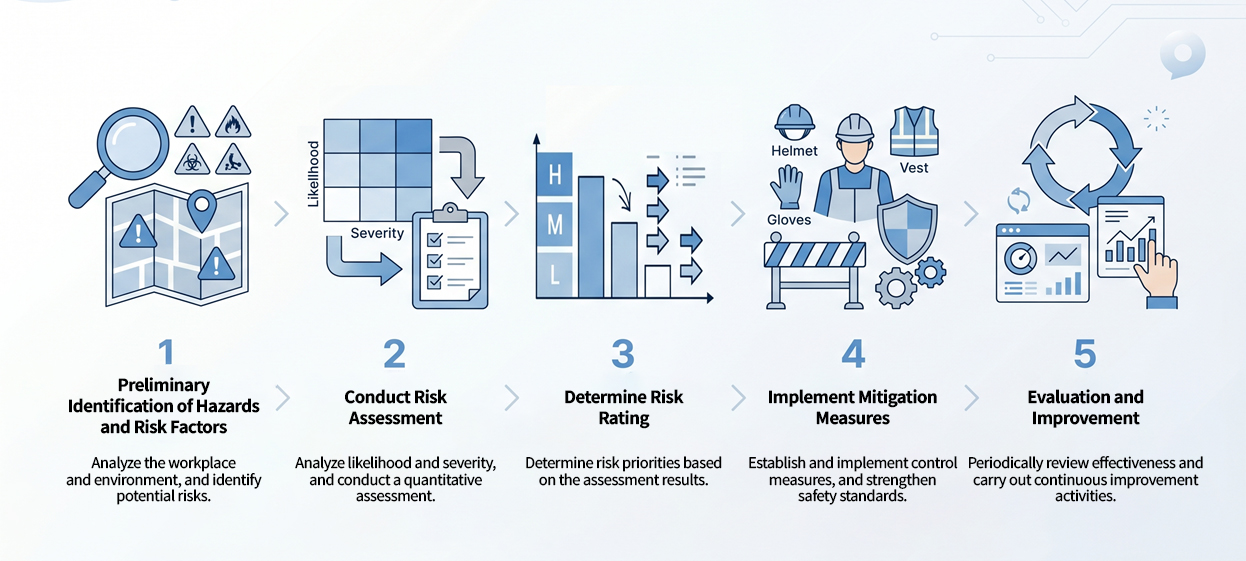
Metrics and Targets
Metrics
Health & Safety Management Performace
| Category | 2025 Result | 2026 Target |
|---|---|---|
| LTIFR | 0.79 | 0.59 |
| TRIFR | 1.93 | 3.53* |
| Serious-accident victims(persons) | 2 | 0 |
Targets
Mid- to Long-Term Health & Safety Management Targets
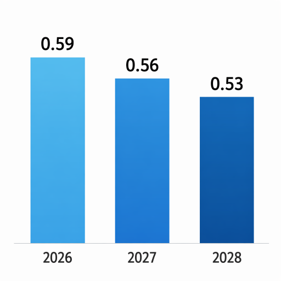
LTIFR Mid- to Long-Term Target
To enhanace employees' safety and health awareness, POSCO operates a Total Recordable Injury Frequency Rate(TRIFR) indicator in addition to the existing Lost Time Injury Frequency Rate(LTIFR). Through this, we establish a culture that surfaces even small accidents and strengthen safety management from a preventive perspective. By reflecting quantitative safety indicators in management KPIs, we share responsibility for safety and health from field managers to executives and foster a culture that encourages voluntary safety-improvement activities.
POSCO sets short-, medium-, and long-term targets alongside reporting-year performance for key safety and health indicators and operates a mid- to long-term safety and health management roadmap. Performance for each target is regularly monitored and implementation reviewed through the Health & Safety Management Committee and related councils.
POSCO continually carries out safety-strengthening activities to achieve these mid- to long-term targets.
| 2025 Activities | 2026 Plans |
|---|---|
| · Strengthen safety activities true to the essence of Industrial accident prevention · Improve the functioning of the field safety-management system and build a self-directed, accountable implementation system · Increase employee acceptance and internalization through practical safety systems |
· Pursue practical safety activities focused on preventing serious accidents · Establish field safety leadership and a supervisor-centered self-directed safety-management system · Improve the effectiveness of safety activities through worker participation |