Environmental Impact
Management System
Organizational Structure
Dedicated Organization
POSCO established the Safety, Health & Environment Division under the CEO to ensure responsible environmental management and enable swift decision-making, and reorganized the Environment & Energy Planning Office under this division. The Environment & Energy Planning Office develops annual mid-term environmental management and technology strategies. In addition, we have designated the headquarters' environment executive as the Chief Environmental Management Officer, with top-level decision-making authority over all environmental management activities.
The Environmental and By-Product Group is responsible for establishing and operating the steelworks' environmental management system, including permitting and approvals, inspection of emission-prevention facilities, management of chemical substance training records, and waste recycling operations. The Environment & Energy Planning Office addresses domestic and international carbon regulations, including the CBAM(Carbon Border Adjustment Mechanism), as well as energy policy and external greenhouse gas (GHG) assessments. The Energy Department optimizes facility operations and management to ensure the stable supply of by-product gas, electricity, water, and hydrogen within the steelworks, while also driving reductions in externally purchased energy through improvements in power generation efficiency, maximization of by-product gas recovery, and energy-saving initiatives across operating plants.
Environmental Management System

Environment and Energy Experts’ Forum
Since 2022, POSCO has built on the foundation of its Environmental Advisory Committee and currently operates the Environment and Energy Expert Forum to gather expert insights on the environmental impacts of its operations, support local environmental improvement, and strengthen communication with surrounding communities. The Forum is held quarterly and brings together approximately 12 internal and external experts in the environment and energy fields to discuss key issues related to POSCO’s operations. In 2025, three sessions were held to address priority topics. We will continue to engage with experts and opinion leaders in these fields to address environmental challenges and drive continuous improvement at the company level.
Environmental Policy
POSCO Holdings, the holding company of the POSCO Group, develops and publicly discloses an environmental policy applicable to all group operating companies. The policy aims to strengthen our response to environmental risks by building robust sustainability and environmental management frameworks, and to contribute to environmental protection in collaboration with subsidiaries and stakeholders. POSCO outlines principles for the responsible management of key environmental issues, including climate change, water resources, air emissions, and waste, and operates under an environmental management policy tailored to the steel industry, in accordance with its Environmental Management Manual and internal guidelines.
Environmental Regulatory Compliance System
Environmental Regulatory Compliance Activities
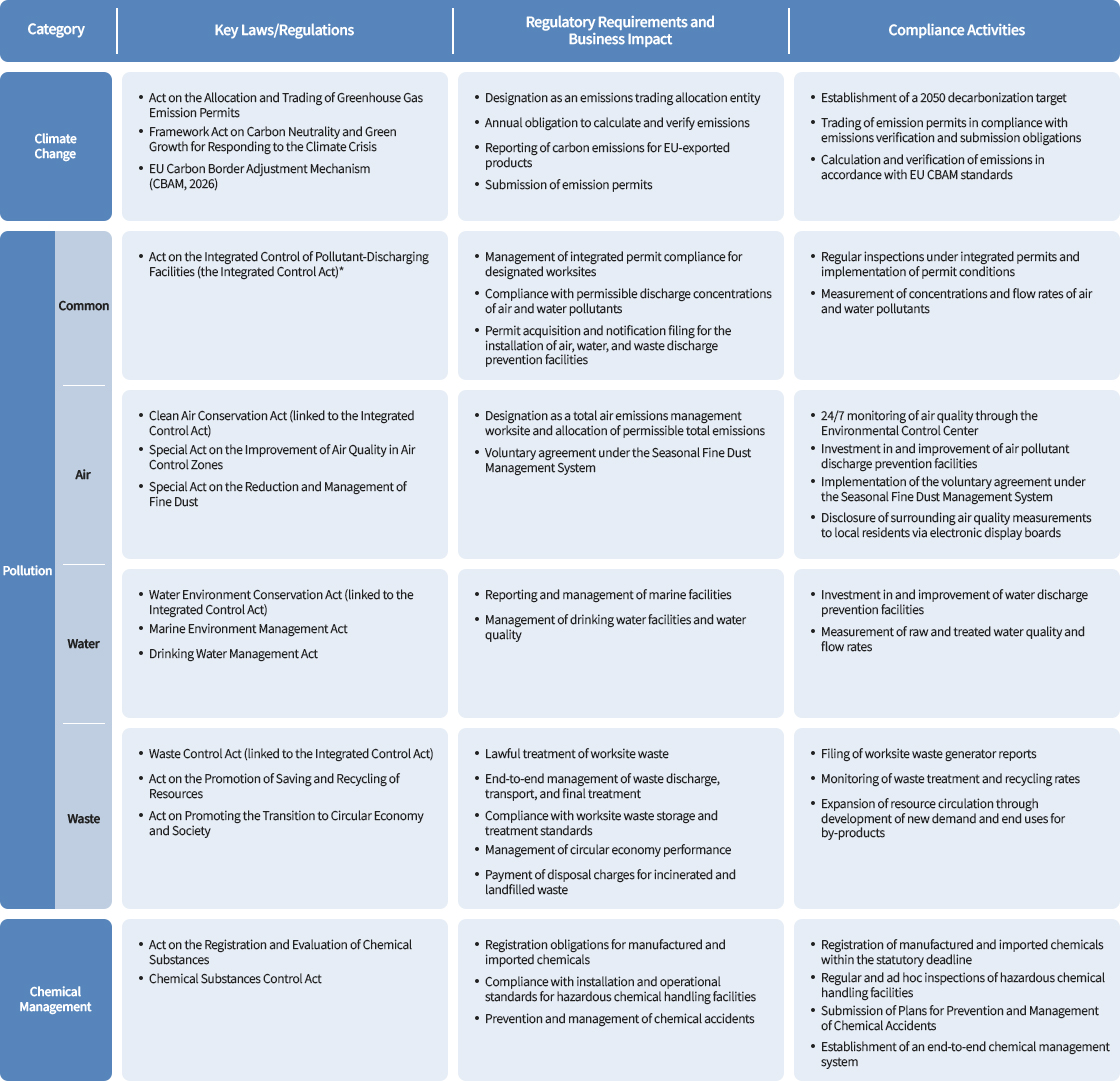
POSCO identifies rapidly evolving market conditions and domestic and international environmental regulations as both risks and opportunities, assesses their implications for business operations, and incorporates them into mid- to long-term business strategies and investment decisions. To manage policy-related risks, we continuously monitor the environmental regulations and policies from the Ministry of Climate, Energy and Environment(MCEE) and other relevant authorities, proactively identify potential risks before they materialize, and actively engage in policy discussions to support sound and forward-looking policy development.
Site Environmental Impact Assessment
To conserve biodiversity and minimize environmental impact, POSCO conducts environmental impact assessments and Follow-up survey of environmental impacts throughout the development and operation of its business activities.
In the early stages of each project, we analyze environmental impact factors to minimize any effects on surrounding ecosystems. Throughout operations and after project completion, we conduct regular surveys and monitoring across key areas ― including air quality, water quality, soil, marine sediments, and flora and fauna. Drawing on these findings, we incorporate necessary improvements into our projects and implement mitigation measures accordingly. We also maintain ongoing management efforts to support sustainable growth and ecosystem protection, in close collaboration with local communities and relevant authorities.
Third-Party Environmental Certification
POSCO's major worksites have obtained internationally recognized certifications for environmental management―including ISO 14001(Environmental Management System), ISO 50001(Energy Management System), Environmental Product Declaration, and GR Certification―establishing a systematic framework for environmental management. To maintain these certifications, we conduct annual internal audits at the individual unit level, led by each site’s environmental department, alongside surveillance and recertification audits by accredited external certification bodies. Audit results are reported to senior management, and our environmental strategies and targets are reviewed and refined accordingly to ensure an effective environmental management system.
Environmental Certificates
| Certification | Certification Validity Period |
|---|---|
| ISO 14001 | 2024-07-30 ~ 2026-10-31 |
| ISO 50001 | 2024-09-25 ~ 2027-09-24 |
| Environmental Product Declaration | 2024-10-24 ~ 2029-10-24 |
GR | 2024-12-24 ~ 2028-12-23 |
Management Activities
Environmental Management Activities
Environmental Training
POSCO operates a range of environmental training programs tailored to the specific functions and responsibilities of each department, with the goal of strengthening site-led environmental management.
In 2025, we conducted group training for ISO 14001 personnel on environmental management system requirements and internal auditing techniques. We also provided specialized training for on-site operations department leaders, plant leaders, and dedicated environmental personnel at the steelworks ― covering environmental laws and regulations, approaches to preventing and managing key risks across environmental categories, and the systems and programs we have established and continue to implement in order to advance site-led environmental management.
To further raise environmental awareness across the organization, we are also working to enhance practical management capabilities at the field level by sharing key information on priority environmental issues with site managers, employees, and partner companies through Labor-Management Joint Committee activities.
Environment Training Results(2025)
| Course | Participants |
Completed (persons) | Date | Format |
|---|---|---|---|---|
| ISO 14001 Internal Auditor and Working-Level Staff Training | Sector representatives by department | 83 | May | Offline |
| ISO 50001 Internal Auditor and Working-Level Staff Training | Sector representatives by department | 49 | June | Online |
| Environmental Training for Operations Department Managers | On-site operations Plant Leaders and Section Leaders, Deputy Plant Leaders, Deputy Section Leaders | 166 | February, | Offline |
|
Training for Enhanced Environmental Management Capabilities | Dedicated environmental personnel | 690 | Year-round | Offline |
|
Training for Enhanced Chemical Substance Management Capabilities |
Hazardous chemical substance managers by plant | 494 | Year-round | Offline |
|
Easy-to-Understand POSCO Environmental Management e-Learning Course | All employees |
1,219 | Year-round | Online |
Environmental Investment
To drive environmental improvements ― including reducing air pollutants and expanding by-product recycling ― POSCO invested approximately KRW 2,294.6 billion over the past six years(2020~2025) in areas such as Tele-Monitoring Systems(TMS), the introduction of NOx and SOx reduction facilities, and upgrades to dust collection systems.
Environmental Investment Performance(2020~2025)
| Category | Highlights | Performance |
|---|---|---|
| Air Quality Improvement |
|
19,953 |
| Water Environment Improvement |
|
2,636 |
| By-Product Resource Recovery & Recycling |
|
127 |
Others(Chemicals, soil, etc.)
|
|
230 |
|
Total |
22,946 |
|
Pro-Environment Consulting Section
In February 2021, we launched the Pro-Environment Consulting Section to provide comprehensive odor improvement services ― from root cause diagnosis to solution development ― for odor-generating worksites within the Pohang steel industrial complex.
Drawing on our facility operation expertise and environmental improvement technologies, the Pro-Environment Consulting Section works alongside Pohang City to address these challenges. Since 2021, we have been identifying the causes of odor emissions at affected worksites ― including fertilizer manufacturers and steel sub-material producers ― and conducting performance assessments of odor control equipment such as scrubbers to develop targeted improvement measures. To achieve more fundamental odor reduction, we also jointly developed two key technologies with RIST: one to replace odor-generating raw materials in steel sub-material manufacturing with low-odor POSCO by-products, and another to substitute odor-causing binders used in fertilizer production with low-odor alternatives. Odor diagnosis results and improvement recommendations have been shared with individual businesses and Pohang City, accompanied by dedicated briefing sessions. Each worksite is continuing to pursue upgrades to its odor control facilities ― including the installation of new scrubbers ― alongside ongoing trials of low-odor raw material substitution. Where improvement measures require capital investment, these are being implemented in connection with Pohang City's small-scale pollution control facility support program for SMEs. By 2025, the Pro-Environment Consulting Section had completed environmental consulting at 22 worksites.
Pollution Management Activities
Air Pollutant Reduction
Under the Special Act on the Improvement of Air Quality in Air Control Zones, POSCO manages total air emissions by year and installs Tele-Monitoring Systems (TMS) for real-time monitoring at emission outlets whose previous-year emissions exceed 3 tons of NOx·SOx or 0.15 tons of dust.
Air Pollutant Reduction
Despite external challenges such as supply instability in fuel and raw materials driven by trade sanctions, POSCO remains committed to reducing air pollutant emissions through the operation of air pollution control facilities and continuous improvements in combustion efficiency.
Since 2004, we have operated sulfur oxide(SOx) removal systems at our sintering plants using sodium bicarbonate injection and activated carbon adsorption technologies. To reduce nitrogen oxide(NOx) emissions, we have installed Selective Catalytic Reduction(SCR) and Selective Non-Catalytic Reduction(SNCR) systems at major emission sources, including sintering facilities and power plants, ensuring full compliance with all applicable regulatory emission standards. We continue to drive further reductions through ongoing optimization of facility operations. Across our steelworks, more than 1,500 dust collectors are in operation to minimize dust emissions. In 2022, we installed two-stage dust collection systems at all eight blast furnaces―three in Pohang and five in Gwangyang―to treat residual gases generated during blowdown and blow-in operations, further reducing pollutant emissions.
Fugitive Dust Reduction
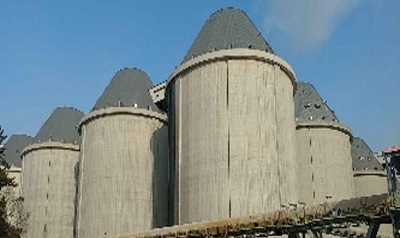
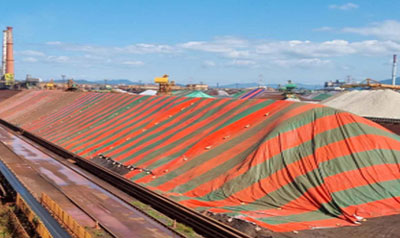
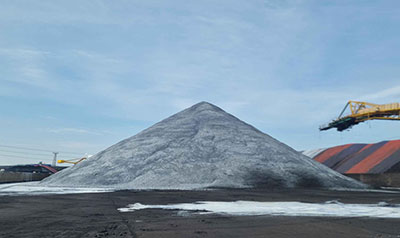
POSCO remains fully committed to reducing fugitive dust emissions and improving the quality of life for residents living near its steelworks. For fuel and raw material yards, we are pursuing phased enclosure with careful consideration of dust dispersion characteristics, material properties, and operational efficiency, while reinforcing dust suppression measures through the use of covers, water spraying, and surface hardeners. In December 2019, we signed a voluntary agreement with the Korean government to reduce fine dust emissions during the four-month high-concentration period from December to March. Under this agreement, the Ministry of Climate, Energy and Environment(MCEE) assigns annual reduction targets that are progressively more stringent than those applied prior to the introduction of the Seasonal Particulate Matter(PM) Management System, and we continue to meet these targets through ongoing efforts to improve the capacity utilization and operational efficiency of our air pollutant reduction facilities.
During the fifth implementation period of the Seasonal Particulate Matter(PM) Management System (December 2023~March 2024), Gwangyang Works was recognized as the top-performing site in the voluntary agreement evaluation for its outstanding contribution to reducing fine dust emissions across the southern region.
-
Silo
-
Yard covering
-
Surface hardener spraying
Chemical Safety Management
POSCO operates a thorough monitoring system covering the entire lifecycle of chemical substances ― from transport and use through to disposal ― to ensure their safe handling at all times.
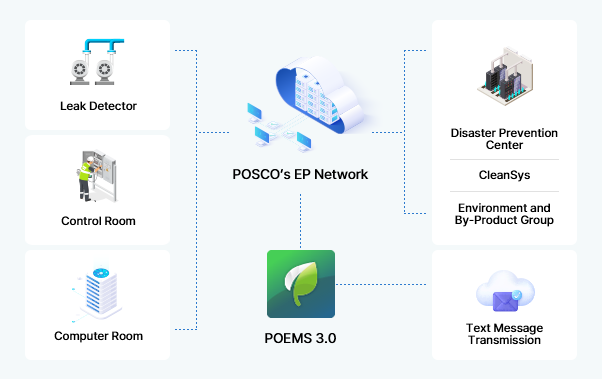
In strict compliance with Act on Registration and Evaluation of Chemicals(AREC), we have completed the registration of all chemicals handled in quantities of 100 tons or more per year, and are implementing a systematic management plan to register those handled in quantities below 100 tons within the statutory deadline. We also comply with safety standards for facilities handling chemical substances and are continuously strengthening our leak detection systems to minimize the risk of accidents. Since 2016, we have operated a real-time location tracking system for chemical transport vehicles, tailored to the specific conditions of our steelworks, to ensure safety throughout the transportation process and enable immediate response in the event of an emergency.
Chemical-accident Prevention and Response System
POSCO has established a proactive safety management framework and a multi-layered response system to prevent chemical accidents. To this end, we conduct regular, in-depth inspections of facilities handling hazardous chemicals and carry out ongoing replacement of aging equipment. We also strengthen our prevention efforts by identifying and addressing potential hazards in advance through process-level risk assessments. Led by our dedicated chemical management department, we have appointed more than 100 chemical managers across the organization, establishing a clear accountability structure. Regular chemical accident response and safety training programs are held for all employees to ensure that field-level response capabilities are consistently maintained.
We have also put in place a robust response framework to minimize the impact of any incident that does occur. Our Safety and Disaster Prevention Center operates around the clock, staffed with trained professionals and equipped with specialized disaster prevention vehicles to maximize early response capabilities. Regular joint drills with public authorities and internal fire drills are also conducted to keep our emergency preparedness sharp. Furthermore, as a leading member of the local chemical safety network, we actively support the chemical safety efforts of SMEs and participate in regional chemical safety committees, fulfilling our social responsibility to prevent chemical accidents in the communities where we operate.
Emergency Response System for Chemical Accidents at POSCO Works

-

Chemical Substance Transportation Monitoring System
-
Chemical Substance Facility Leak Detection System
Management of Hazardous Factors and Hazardous Chemicals
As designated workplace environment measurement institutions by the Ministry of Employment and Labor, the Pohang and Gwangyang Works conduct regular assessments of hazardous factors exposure levels and establish targeted reduction measures based on the findings. We have set internal control standards that are more stringent than legal requirements―at 50% of the legal exposure limits for chemical substances―to guide our hazard reduction efforts. Items identified for improvement through chemical risk assessments are addressed through facility upgrades and other necessary measures. We also operate a prohibited chemical substance management system to strictly control the introduction of substances that may pose health risks, preventing them from entering our facilities. Before work begins, employees are informed of the health impacts of relevant chemicals, the required PPE for each substance type, and applicable control measures. Where necessary, task-specific chemical handling training is provided for relevant chemical handling activities.
Mid- to Long-Term Total Air Emissions Target
POSCO has established mid- to long-term reduction targets to manage air pollutant emissions from its steelmaking processes. In 2025, we emitted a total of 51.5 thousand tons of air pollutants and aim to progressively reduce emissions to 51.3 thousand tons in 2026, 51.2 thousand tons in 2027, and 51.0 thousand tons in 2028.
| Category | 2025 Actual | 2026 | 2027 | 2028 |
|---|---|---|---|---|
| Total air emissions | 51.5 | 51.3 | 51.2 | 51.0 |
Water Management Activities
Effluent Quality Management
POSCO maintains strict water quality management and discharges only wastewater that cannot be recycled, minimizing any environmental impact on nearby marine areas.
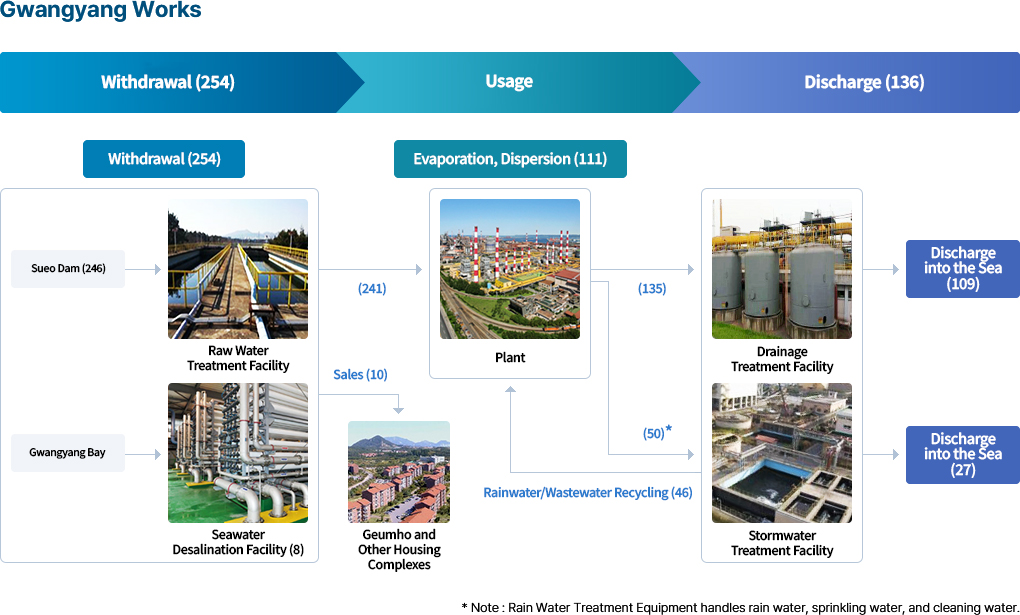
Wastewater first undergoes primary treatment ― physical and chemical processes ― at each plant within the steelworks, followed by secondary biological treatment to address organic content. It is then subject to final treatment at our wastewater terminal treatment facility. Throughout this process, discharge concentrations of key pollutants ― including SS, TOC, and T-N ― are managed against in-house standards that are stricter than those required by law.
Wastewater Treatment System

Operation of Seawater Desalination Facilities
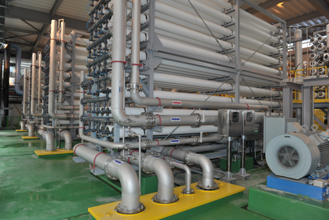
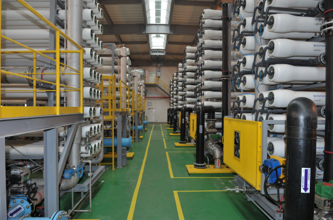
POSCO improves water-use efficiency and reduces freshwater withdrawal by collecting warm drainage water generated at its power plants and converting it into industrial water through pretreatment and reverse osmosis processes.
At our Gwangyang Works, we operate a seawater desalination plant that uses seawater heated to 20~30°C from power plant condenser. We first treat the intake water through Dissolved Air Flotation(DAF) and Ultrafiltration(UF) to remove suspended solids and other impurities. The pretreated water then undergoes a reverse osmosis process(SWRO + BWRO), where our high-pressure pumps remove dissolved salts and ionic substances to produce clean industrial water.
Our seawater desalination plant has a capacity of up to 30,000 tons per day, helping replace conventional freshwater sources such as reservoir water and reducing pressure on local water resources. By using warm drainage water instead of ambient seawater, we reduce energy consumption. We further improve efficiency through an Energy Recovery Device(ERD), which recovers pressure energy from the high-pressure stream.
Seawater Desalination Facility
Participation in CDP Water Security
POSCO has participated in the CDP Water Security program since 2016. CDP requires the disclosure of water-use data, water risk assessment and management strategies, and water-saving targets and performance results. In the 2025 assessment, we received a Management B rating.
Water Conservation and Recycling Measures
Based on the water risk profile of each worksite, POSCO proactively responds to water scarcity risks through optimized water management and expanded water recycling, while strictly managing effluent quality to minimize environmental impacts on the waters surrounding its steelworks.
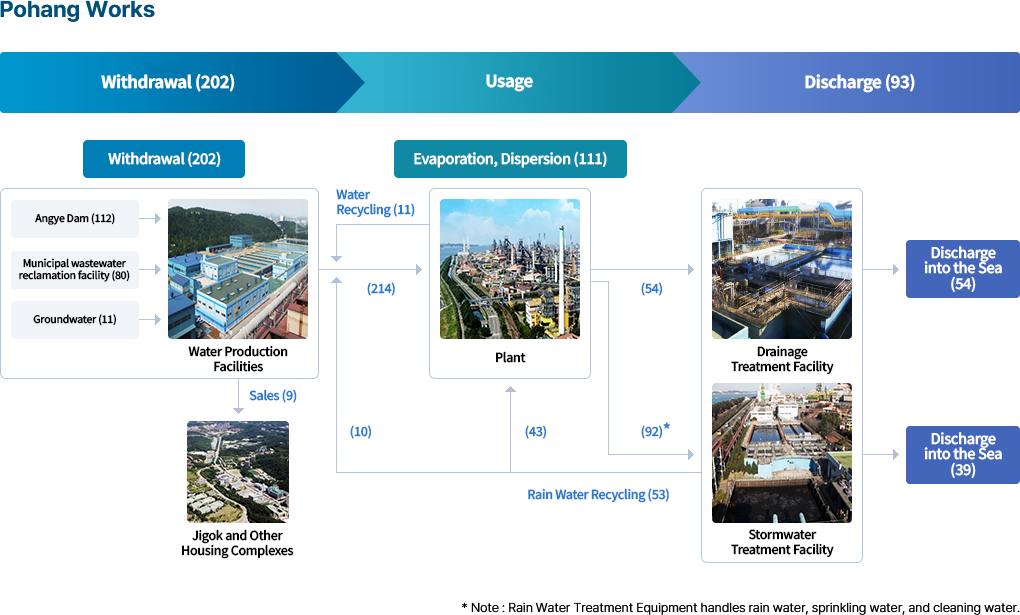
To reduce reliance on surface water and groundwater, POSCO is expanding the use of alternative industrial water sources. Since 2015, Pohang Works has utilized reclaimed municipal wastewater, reducing freshwater consumption by 80,000 tons per day, while Gwangyang Works has operated a seawater desalination facility since 2014, reducing freshwater consumption by up to 30,000 tons per day. POSCO also continues to invest in advanced water recycling technologies. We are actively exploring ways to make greater use of high-quality treated wastewater from individual plant water treatment facilities, and are developing technology to process final effluent through Reverse Osmosis(RO) for reuse as industrial water ― rather than limiting its use to road or yard spraying.
Beyond minimizing wastewater generation at our steelworks, POSCO continuously works to improve our water recycling rate by collecting, treating, and reusing all recyclable water ― including cooling water, rainwater, and yard and road sprinkling water ― through stormwater treatment facilities. As a result, in 2025 we reused 20% of our wastewater(based on domestic worksites), contributing to alleviating water scarcity risks for local communities. As part of our commitment to addressing national water scarcity, we also participate in the Water Positive council led by the Ministry of Climate, Energy and Environment(MCEE), and plan to further strengthen our water resource management capabilities by developing and scaling up wastewater reuse research initiatives.
Pohang Works Water-Use Process
Gwangyang Works Water-Use Process
Water Management Activities
POSCO reviews each year whether its worksites are located in water-stress or water-risk areas, and it subdivides water-resource risk to intensively manage Water Stress High areas and worksites with high water intake volumes.
In March 2024, POSCO signed a business agreement with the Ministry of Climate, Energy and Environment(MCEE) to respond to climate change and resolve the water crisis, building a joint response system for water risks caused by climate change.
1. Gwangyang Works(Water Stress High)
According to the 2023 Water Stress analysis from WRI1), the Gwangyang area was designated as a high water-stress region as of August 2023. To minimize the risk of reduced plant operating rates due to water scarcity, we have established and are managing response plans and emergency measures in the event of water supply restrictions.
1)World Resources Institute
Status Analysis
- As steelmaking operations run continuously year-round, it is critical to mitigate risks of unplanned shutdowns in core equipment such as blast furnaces and converters, which handle high-temperature materials
- A water supply reduction of 5% or more from standard operating levels may lead to production bottlenecks and decreased throughput in downstream facilities, ultimately disrupting stable steel output and supply continuity
Emergency Response to Water Shortages
Under the Projected Water Supply-to-Capacity Utilization Scenario, should water supply fall short by more than 10% of standard operating levels, phased emergency measures are implemented, including maximum operation of the seawater desalination facility (30,000 tons/day) and securing freshwater reserves of up to 260,000 tons in the water reservoir
Projected Water Supply-to-Capacity Utilization Scenario
| Water-supply rate |
100% | 95% | 89% |
84% | 79% |
| Capacity Utilization |
100% | 75% | 50% |
25% | 0% |
Emergency Response Organization Chart

Response plan and performance (2025)
| Response Plan | Details | Performance |
|---|---|---|
| Emergency preparedness | Maintain maximum operation of seawater desalination facilities | Secured emergency supply capacity of 30,000 tons/day |
| Cooperation with relevant agencies | Implement business agreements with Korea Water Resources Corporation(K-water) and with the Ministry of Climate, Energy and Environment(MCEE) on resolving the water crisis | Established emergency supply system Joined the Water Positive council |
2. Pohang Works(Water Stress Medium High)
Although Pohang Works is located in a Medium-High Water Stress zone with relatively low overall water-related risk, POSCO works towards minimizing water resource risks given its substantial water intake volumes.
Response by Yeongcheon Dam Reservoir Level(Intake Source)

Emergency Response System for Water Supply Shortages
POSCO has established a contingency plan to secure alternative water supplies and reduce consumption in response to varying Yeongcheon Dam reservoir levels.
| Reservoir Level | Response |
|---|---|
28.0% or Less (Drought at a 'Critical' Level) |
|
12.5% or Less (Water supply restriction at ‘Low Water’ Level) |
|
Water Usage Target
| Category | Unit | 2025 Targets | 2025 Results |
|---|---|---|---|
| Water1) Usage | million tons | 157 | 1592) |
1)All water withdrawn for industrial use in production processes at the steelworks
2)Water consumption exceeded the target as freshwater was temporarily used as a substitute during maintenance of water recycling facilities
Waste and Resource-Circulation Activities
Resource Circulation Related Risks and Opportunities
POSCO identifies the financial impacts that waste-generation factors associated with its operations may have on the Company and systematically assesses related risks and opportunities. To strengthen our response capabilities regarding waste and circular economy-related issues, we develop detailed response measures and implement them in phases.
| Type | Value Chain |
Risk and Opportunity Factor | Description (incl. financial impact) | Detailed Response |
|---|---|---|---|---|
| Risk | Upstream |
- Continued tightening of waste-management regulations within the raw materials industry | - Non-compliance with waste-related regulations by suppliers may result in costs arising from supply disruptions, production delays, and product quality deterioration | - Integration of waste-related regulatory compliance requirements into the Supplier Code of Conduct and monitoring within the supply chain risk management system |
Own |
- Continued tightening of waste-management regulations in steel manufacturing(Wastes Control Act, Act on the Promotion of Saving and Recycling of Resources) | - Violations of waste-related laws and regulations may result in management fees and litigation costs (within operating expenses), litigation provisions, and fines and penalties (non-operating expenses) - Investments in waste-reduction technology development and related R&D activities may result in the recognition of intangible assets (R&D costs), operating expenses, and SG&A - Facility operating costs, including outsourced processing costs, may arise for the lawful treatment of waste (steel by-products, corroded steel, etc.) |
- Management of the entire process from waste generation to final treatment in accordance with established waste management guidelines - Ensuring lawful waste treatment through understanding of environmental regulations and completion of relevant training |
|
| Opportunity | Downstream |
- Depletion of natural resources used as raw materials for cement, fertilizers, and construction aggregates | - Increase in supplier revenue driven by the expanded recycling of waste resources, including steel by-products | - Substitution of natural resources in compliance with the Steel Slag Recycling Guidelines(Ministry of Climate, Energy and Environment Notice No. 2021-77) and relevant KS standards |
Pucharsing Recycled Materials
POSCO comprehensively manages its annual scrap procurement. In 2025, total scrap purchases including both domestic and imported sources amounted to 2,092 thousand tons with associated costs of KRW 939.6 billion. This represents an increase of 168 thousand tons and KRW 10 billion compared to the previous year. In addition purchases of recycled materials driven by expanded reuse of used materials and waste recycling reached KRW 346 billion in 2025.
Domestic and Imported Scrap Procurement
| Year | Purchase Volume | Purchase Value |
|---|---|---|
| 2024 | 1,924 | 9,296 |
| 2025 | 2,092 | 9,396 |
Plant, Equipment and Materials Procurement from a 3R Perspective
| Category | Project Name | 2024 | 2025 |
Calculation |
|---|---|---|---|---|
| Reuse | Expanded Reuse of Used Materials | 593 | 666 | - Value of used materials based on new-product unit price and valuation rates * Σ {usage × new-product unit price × 60% (Grade A) or 15% (Grade B)} |
| Expanded Use of Recycled Repaired Materials | 1,115 | 1,353 | - Value of recycled materials received after repair(QS code) |
|
| Reduce | Expanded Use of ECO Refractories | 1,320 | 1,353 | - Value of ECO refractories received containing 5% or more recycled waste-refractory material |
Recycle | Copper Recovery from Waste Cables | 129 | 89 | - Value of copper from waste cables + copper scrap from waste tuyeres * Σ (copper recovered from waste cables, etc. × copper unit price) |
Total | 3,157 | 3,460 | - | |
Operating the By-Product Management System
POSCO has established a Waste Management Guideline to systematically manage waste from generation through to final disposal. The Guideline sets out the scope of responsibilities, the roles and accountabilities of relevant departments, definitions of relevant terms, and operational procedures to be followed when waste is generated.
Designated wastes
In accordance with the Enforcement Decree of the Wastes Control Act(Presidential Decree) of Korea, wastes containing hazardous substances are classified as designated wastes. We register and manage real-time handling records of designated wastes through the electronic information-processing system operated by the Ministry of Climate, Energy and Environment (the Allbaro System). We are subject to administrative fines under the Wastes Control Act in the event of any violation of applicable government standards.
For designated wastes, recyclable materials are recovered as resources through collaboration with specialized recycling companies, while materials that are difficult to recycle are properly treated in accordance with relevant laws by specialized waste treatment companies.
In 2025, we ensured that all designated waste generated was lawfully treated in compliance with applicable regulations. In addition, the proportion of designated waste(which accounted for 1.47% of total waste in 2017) decreased to 0.57% as of 2025.
Designated-Wastes Ratio by Year

Resource Circulation
POSCO contributes to a circular economy through the extensive recycling of by-products generated during steel production, including slag, dust, and sludge. Since being designated as a worksite subject to resource circulation performance management in 2018, we have worked each year to meet the resource circulation targets set by the government. To minimize the landfilling and incineration of residual waste, we are actively developing resource recovery technologies and identifying new end-use applications, with a target to maintain a by-product resource recovery rate of 98% or higher(based on company-wide data, measured as the ratio of recycled volume to total generated volume).
Blast Furnace Slag
Slag accounts for more than 75% of the total by-products generated at our steelworks. It is produced when impurities such as silicon(Si) and aluminum(Al) separate out during the steelmaking process. Slag is classified into blast furnace slag and steelmaking slag depending on the process in which it is generated. Blast furnace slag is produced during the ironmaking process and, when rapidly cooled with high-pressure water jets, forms a sand-like granulated slag ― which makes up the majority of blast furnace slag. Its primary components, calcium oxide and silicon dioxide, allow it to serve as a viable substitute for cement, helping to reduce CO₂ emissions associated with the calcination of traditional cement raw materials. In collaboration with RIST and POSCO E&C, we developed PosMent1), an eco-friendly cement that contains up to 58% more blast furnace slag than conventional slag cement, and are working to expand its use.
Granulated slag is also used as a raw material for siliceous fertilizers, as it contains high levels of silicic acid ― an essential nutrient for rice growth. Silicic acid strengthens rice stalks, making them up to three times more robust than those grown with conventional fertilizers, while also improving rice yields and overall quality, including flavor. Additionally, iron ions(Fe3+) present in the slag reduce the activity of methane-producing bacteria, lowering methane(CH₄) emissions during rice cultivation by approximately 14%. In partnership with domestic universities, POSCO quantified the methane reduction effect of silicate fertilizer by application volume. In January 2022, this work was recognized as a Korean-type GHG Correction Factor by the government, and in May 2024, the technology was officially designated as a carbon reduction agricultural practice by the Ministry of Agriculture, Food and Rural Affairs(MAFRA).
Steelmaking Slag
Molten iron produced in the blast furnace contains trace impurities. Steelmaking slag is generated during the steelmaking process, where the chemical composition of molten steel is precisely adjusted to meet the specifications of each product. Steelmaking slag is crushed and magnetically separated to recover valuable iron(Fe), which is then reused as a raw material in the steelmaking process. The remaining residual slag ― chemically and physically similar to natural rock ― is repurposed as a construction aggregate to replace natural aggregate. Prior to use at civil engineering sites, steelmaking slag undergoes an aging process for stabilization, and utilization sites are periodically monitored in accordance with the Slag Management Guidelines issued by the Korea Iron and Steel Association. In December 2025, we jointly established slag utilization guidelines for civil engineering and embankment applications with the Korean Society of Civil Engineers, to ensure environmental risks are managed from the earliest stages of planning.
Dust·Sludge
Among the dust and sludge generated from environmental facilities such as dust collectors and water treatment facilities, by-products with high iron and carbon content are either reused in their raw form or processed into pellets and briquettes before being reintegrated as raw materials into the ironmaking and steelmaking processes.
1)A type of slag cement that raises the granulated-slag content to 58% and improves product performance by mixing a stimulant developed by POSCO
-
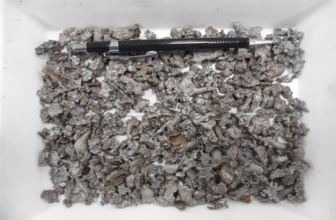
Magnetic Fine Iron Ore
-
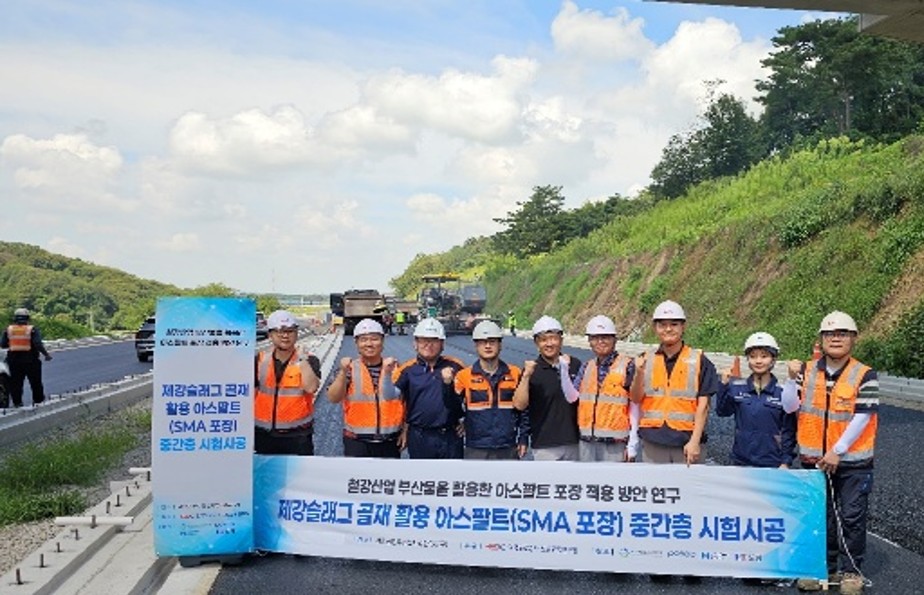
Steelmaking Slag Asphalt Expressway Trial
-
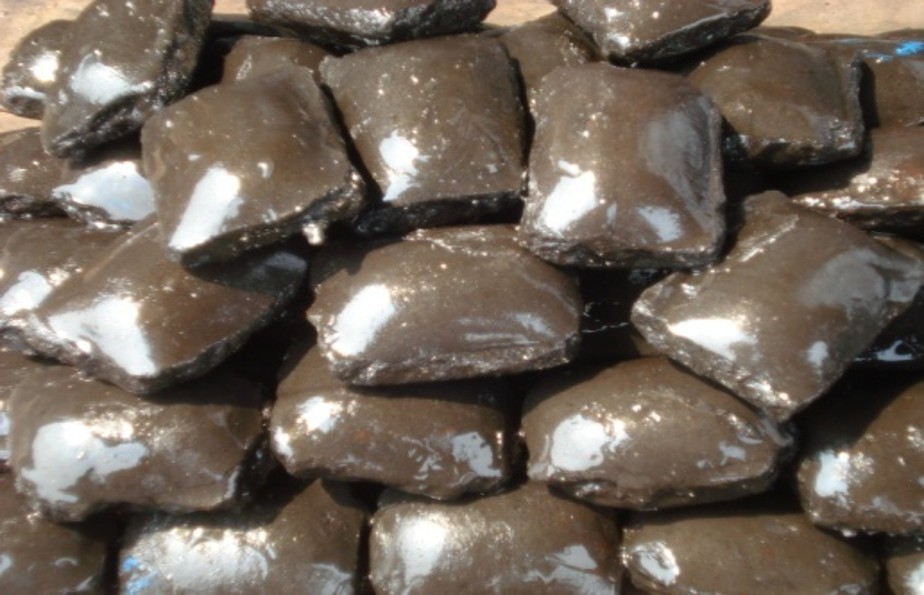
High-Iron Briquettes